Famous coach Oleg Dulub shared his impressions of the draw for the final tournament of Euro-2025 U-21.
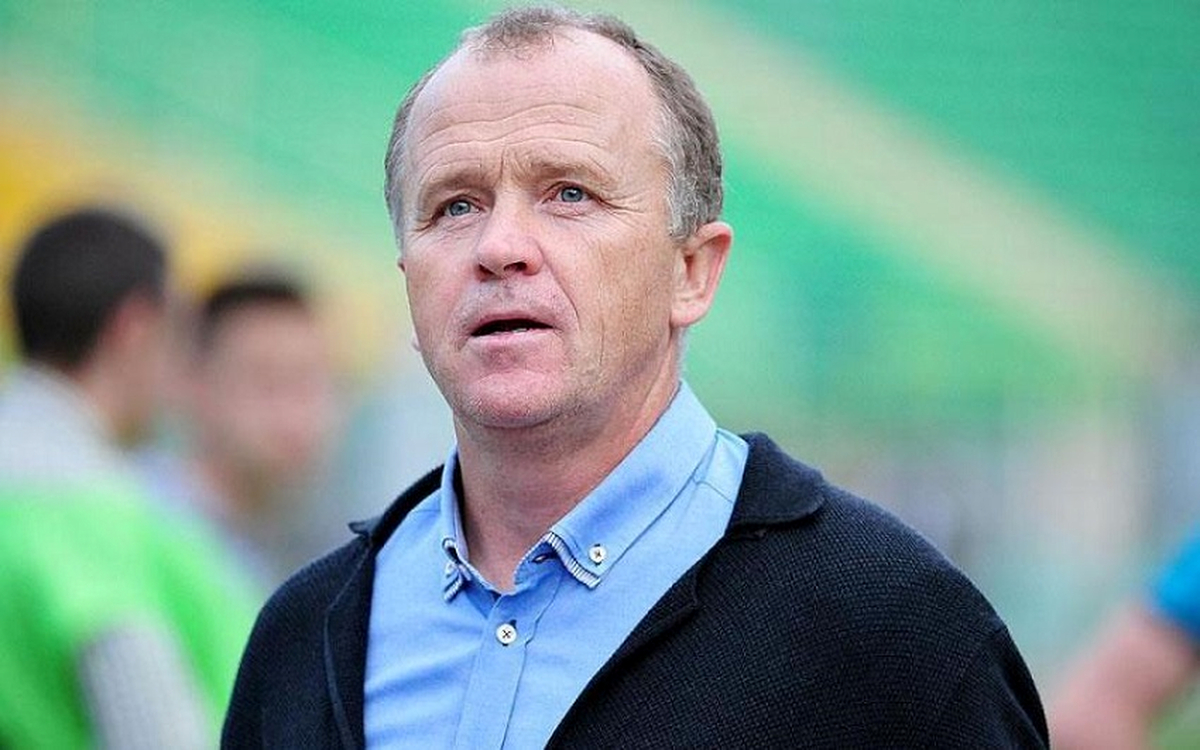 Oleg Dulub
— I rate the draw 50/50: both lucky and unlucky at the same time. Why unlucky? Because we drew quite strong teams at the level of youth football. And lucky because if Ukraine plays aggressive football, which is characteristic of Ukrainian teams, then there are good chances for success in matches against the Netherlands and Denmark.
Yes, on paper the Dutch are the favorites. Their football is, not to say on the rise, but at a consistently high level. I had the opportunity to work with the Dutch, and they focus on player development and gradually integrating them into the first team. Therefore, the result — 10 wins out of 10 in the qualifying group — speaks for itself. Such indicators cannot be achieved by chance.
I wouldn't underestimate Finland either; the group is actually quite even. The Finns made a serious emphasis on developing football, coaching staff, and infrastructure. That's why they look quite good at the youth level. I think we can expect surprises from the Finns, Danes, and a negative performance from the Dutch in this group.
— And overall, how do you assess the performance of the youth national team of Ukraine in the Euro-2025 qualifiers? Up to the last matches, the team was going very confidently, leading the group, and then: two defeats and second place, which can leave an unpleasant residue.
— The national team performed at quite a high level in qualifying. Once the task of qualifying for Euro was achieved, it's clear that it's difficult to motivate players, because there was already a guarantee of passing from the second spot. This is more a matter of psychology than tactics or anything else. It's very hard to maintain a high level of motivation when the main objective has already been achieved.
It should be understood that matches in the U-21 category are already aimed at results. Therefore, fulfilling the task of qualifying for the Euro indicates that Melgosa's team is moving in the right direction.
— Melgosa's team is quite strong with very good players. There are Brashko, Batagov, Rubchinsky, Ocheretko, Voloshin, Krasnopir — the list can go on. Which players from the youth national team would you highlight as key in the “blue-yellow” collective?
— I would highlight Brashko and Batagov — these are key players. I don't want to give anyone advice or impose my opinion, but all the footballers you listed are approaching the national team of Ukraine. They play steadily in their clubs, demonstrating quite a good level of skill. These players can replace national team players without losing quality, like Brashko, for example.
Batagov? If he has stable practice at “Trabzonspor”, then he has a good prospect of becoming a player for the national team of Ukraine. Why? Good physique, speed, and left foot, especially the first pass — such players are rare. His prospects are very good. The question is only how his career will develop in the Turkish Super League. Perhaps it would be better for him to wait for offers from a higher-quality league.
— In the squad of the youth national team of Ukraine during Ruslan Rotan's time, there were obvious stars — Sudakov, Bondarenko, Trubin, and Mudryk. Currently, Melgosa's team does not have such loud names, but it looks much more balanced.
— Those guys from Rotan's team were, after all, one or two years older, which plays an important role at this level. The second point is what you noted: the previous youth team had more star players, but did not have such a balanced team, which Melgosa's team possesses.
Football is a team sport. In fact, it’s not 11 against 11, but 23 against 23, depending on how many players are in the roster. Now, considering the possibility of making five substitutions, you start the match with one team, and by the end of the game, if you bring in five fresh players, you have already got another team with different connections.
Team spirit is also very important. In all strong teams, there exists a healthy atmosphere in the locker room, which creates strong bonds within the team. When you have star players gathered, then, at best, you can count on 11 performers. Whereas in a balanced collective, you have 15-20 combat-ready players you can rely on.
— Euro-2025 will be held in Slovakia in the summer, but it is interesting to know how you assess the prospects of the youth team in this tournament right now. Is Melgosa's team capable of repeating the success of Rotan's team that reached the semifinals of Euro-2023?
— Young footballers are characterized by instability. For example, if Ukraine plays against the Netherlands, then on that particular day, during this match, one must be better than the opponent. Although overall the Netherlands may be a stronger team.
If Ukraine manages to do this, it can go far in this tournament. The coaching staff plays an important role — working on the players' psychology, correctly preparing specific players for specific games. The group that Ukraine is in, I repeat, is indeed even, so every match will be decisive.
— Who do you consider the main favorites of Euro-2025? Will the cup be won by a team whose national team is in the top? Or still, in youth football, unlike adults, do teams that no one bets on have significantly better chances of becoming champions?
— I think that at such a tournament, the winner can be a team that no one bet on before the competition started. This also applies to the Ukrainian youth team since its national team is not among the best in Europe.
But in youth football, a lot is still compared to adult national teams. At major tournaments, the teams that win most often are those whose national teams have significant experience and traditions of going as far as possible in serious competitions.
Over time, players change in the youth team, but specialists, the knowledge base, analytics, and coaching staffs in leading football countries usually remain unchanged. That's why teams like the Netherlands, Germany, Spain, France, Italy are constantly among the favorites. However, surprises are also quite possible. There is always a chance that a team that no one bets on will join this elite.
— Andriy Shevchenko, when he became the president of the UAF, stressed the need to create a vertical structure of national teams. How do you assess the work in this direction so far?
— It is hard for me to speak specifically about the work of the national teams' institute since I am not inside this process. However, we can evaluate the quality of work of each individual coaching staff. At this moment, Melgosa's team is only at the beginning of this long path.
If it is possible to build the national teams' institute well, where the coaches of the U-21 and U-19 teams will work in a unified direction, then players can smoothly ascend through these ranks, having a well-structured platform for growth.
In Western European countries, starting from U-18/U-19 teams, there is one task — to win matches and tournaments. Therefore, the statement popular in post-Soviet countries that at such an age the most important thing is to teach a player to play football is incorrect. Players are taught to play until they are 16 years old. And after that, the main thing is to achieve a positive result, to win, because this is effectively the final stage of preparation for professional adult football.
Vladyslav Liutostansky