The head coach of the Ukraine youth national team, Unai Melgosa, shared his thoughts on the conflict between the PASS platform and Vadim Shabli’s agency, which began with the forward Artem Stepanov’s absence from the national team.
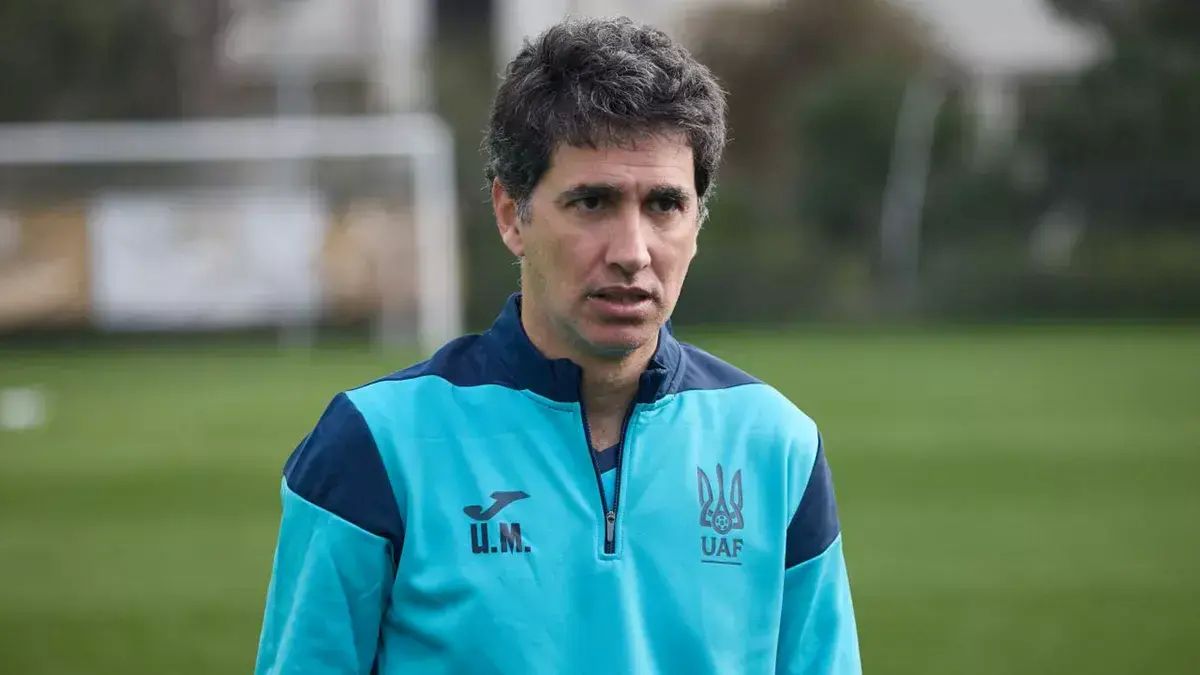 Unai Melgosa
“I work with people from PASS in the federation. I also communicate with agents—this is part of my professional activity. I try to be an open person because sometimes they can provide good information. Generally, I believe that people want to help. Of course, there is a human factor, personal interests, and business.
But in my work, I follow this principle: if I need information—I ask. If someone wants to talk to me—I am open. But there are limits. I clearly understand my responsibility: to take care of the players, to care for UAF, and through my work to care for the country in which I work.
My main goal is to help the coaches in the national team, to do a good job with the youth team. I communicate with Sergey, with the president of UAF, with other people. I don’t have much time. Sometimes I want to talk to my wife, you know? And I need time not for scandals, but for life.
I have never been part of this business; I don’t like it. I have always avoided it. When I see that the conversation crosses the line, I say: “Stop. Enough.” I receive a lot of messages asking why I don’t call this or that player. I always respond: “Thank you for the information.” We choose players together with my staff, who we believe best fit the national team. And that’s all.
I don’t like to discuss specific players, especially when it comes to young guys. There has already been a reaction from UAF to this situation. We care about all players—not only about Artem, but about all the guys I have worked with in the youth categories. For me, the most important thing is individual relationships with them.
I have had personal conversations with Stepanov’s circle and with Artem himself. Everything is fine between us, clear, and there are no problems. I always think about how we, as coaches, can help the players. How to best approach them during gatherings, what works and what doesn’t. They choose how their relationship with the national team should be. We will never pressure or force anyone to play for the national team. Of course, we see the reaction of the public and the fans.
But for me, the main thing is that people know this situation will be resolved. And the best way to resolve it is what we are already doing. It is communication with people, where there are fewer emotions and more understanding.
I am 100% confident that Stepanov wants to play for the national team, and we will resolve this situation. Yes, there are times when difficulties arise, but not everything is always perfect.
I haven’t read anything from the player himself. But when a similar situation arises, I always try to gather information from all sides. Because sometimes what is said can be perceived differently. And then we start to misinterpret words. This causes conflicts.
I communicate with all the coaches of the teams. With some, I talk more about football, with others—about methodology, matches, life, how they cope with the situation in the country. It is important for me that every person I work with becomes a little better professionally after our interaction. This is one of my goals.
Don’t think that such situations arise only in Ukraine. Other countries also have such stories. Believe me, I have talked to everyone and I take all the responsibility upon myself,” Melgosa said.