ASJU correspondent Andriy Todos analyzes the September matches and speculates who could head the national team if Rebrov were to resign now.
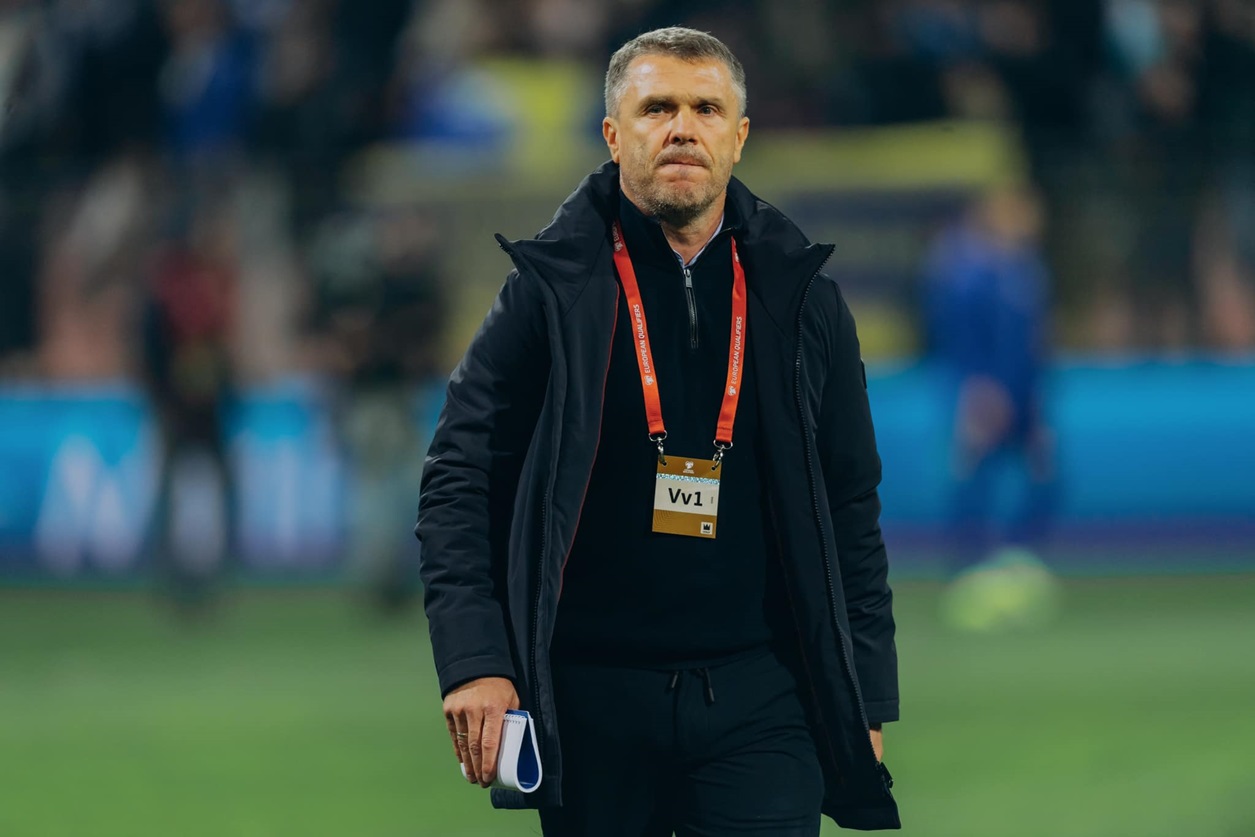 Serhiy Rebrov. Photo — UAF
Anatoliy Trubin expressed himself frankly on Tuesday evening: “It’s embarrassing.”
The 1:1 draw with Azerbaijan in Baku puts the hopes of the Ukraine national team for World Cup qualification in serious jeopardy. It’s a true déjà vu of September 2024: minimal points at the start, only four games ahead, and the campaign is already balancing on the brink of failure.
The Nations League was supposed to be a dress rehearsal for this qualification. Instead, it seems that Ukraine is playing by someone else’s script. Besides bursts of brilliance—like, say, the bright second half of the first match against Belgium in March—there has been no stability in performances so far. Most games follow the same disappointing pattern: a disastrous first half, a revival after the break, belated attempts to save the match, which ultimately become too feeble and too late.
Head coach Serhiy Rebrov has repeatedly emphasized: the main goal of the year is to qualify for the World Cup. The loss to France could still be forgiven considering the strength of the opponent. However, the draw with Azerbaijan was, without exaggeration, unacceptable.
Why isn’t the game working on the field? The problems appear to be both tactical and structural.
Forwards in Isolation
Whether it’s Artem Dovbyk or Vladislav Vanat, any central striker remains unsupported for most of the match. The lack of passes and interactions has led to forwards not being able to score consistently for over a year. And in a group where goal difference could determine the fate of the World Cup spot, this is a massive disadvantage.
Wrong Approach with Wrong Performers
The ball control exists, but chances are almost non-existent. Pass, pass, back to the goalkeeper—and minimal threat created. Some key players also find themselves out of position. Heorhii Sudakov, who is occasionally placed on the left flank, is practically invisible, as his strength lies in playing through the center.
Injuries do not add optimism either. Vitaliy Mykolenko, Viktor Tsygankov, and Roman Yaremchuk missed this camp, leaving the team without proven quality and attacking sharpness.
Without Mykhailo Mudryk, the national team has, in fact, lost its only true unpredictable player. Who can replace his “spark”? Someone from the youth team? Currently, among the candidates, there’s no one who could immediately impact the results in the coming months.
In such moments, Andriy Yarmolenko used to always come to the rescue. Unfortunately, the times when he could turn matches around for the national team are behind him.
What Needs to Change?
Rebrov needs to find solutions urgently.
Reviewing the System
Could playing with two forwards—Dovbyk together with Vanat, as an option—finally bring synergy to the attack? Tsygankov, when he returns from injury, could play “behind the forward,” adding his dynamics. Because one striker on the front line—this style isn’t working.
Changing Roles on the Flanks
If there’s a shortage of quality wingers, perhaps it’s worth pushing the full-backs higher up and playing with wing-backs. This would strengthen the flanks and allow for the introduction of a second striker, which we’ve discussed.
Style of Play
The national team appears too cautious already. A more direct style of play could reveal Dovbyk’s physical power. But this means betting on him as the main “pillar.” Vanat, however, cannot withstand such an approach—he needs the ball “at his feet.” We’ve already had a chance to see attempts at direct football against Azerbaijan, but the striker who started wasn’t suited for such a style. On the other hand, it’s clear that Dovbyk finds it hard to keep up the intensity of two games in a row after the injury he sustained at the beginning of the club season, which is why he hasn’t had much playing practice.
Mentality
Perhaps the most alarming factor is invisible: the lack of joy from playing. The team is anxious, tense, and plays as if it’s against itself. There’s a lack of freedom, confidence, and leadership that could change the course of the match.
Rebrov’s Future
Rebrov’s contract is valid until the end of the qualification or until the World Cup, if Ukraine qualifies. After the September matches, the pressure is mounting. Rebrov’s win percentage is the lowest among national team coaches who have overseen more than 20 games (37%). This is an unpleasant statistic for a legendary player and successful club coach, whose international coaching career thus far seems unstable.
Who Could Replace Him If Rebrov Leaves?
- José Mourinho: sounds like a fantasy—can the UAF afford such a thing?
- Igor Yovichevich: charismatic, speaks Ukrainian, known as a motivator and a subtle “psychologist” in working one-on-one with players.
- Yuriy Vernydub: reliable, disciplined, but not very spectacular as a coach. However, at the national level, stability is often more important than the beauty of play.
- Ruslan Rotan: currently working at “Polissya,” has interesting experience with the youth team, but rather looks like a long-term project than an urgent solution.
- Unai Melgosa: had a strong qualification with U-21 in 23/24 years, but the team flopped in the summer at the final tournament of the U21 Euro. There are doubts whether he is ready to lead the main team.
Despite the discontent of fans and media, currently, the most likely scenario is that Rebrov will stay. He himself stated: “We haven’t gone anywhere yet.”
And considering the chance to fight for the playoffs, history suggests that Ukraine might still finish second—as was the case last year in the Nations League.
The road for Ukraine to the World Cup (for now) is not closed, as Rebrov said himself after the match at Tofiq Bahramov Stadium on Tuesday. But alarming bells can be heard from everywhere. We will find out if any conclusions have been drawn in October…
Andriy Todos, member of ASJU and AIPS