Famous manager and expert Vyacheslav Zakhoivaylo shared his opinion on the current problems in Kyiv Dynamo’s game.
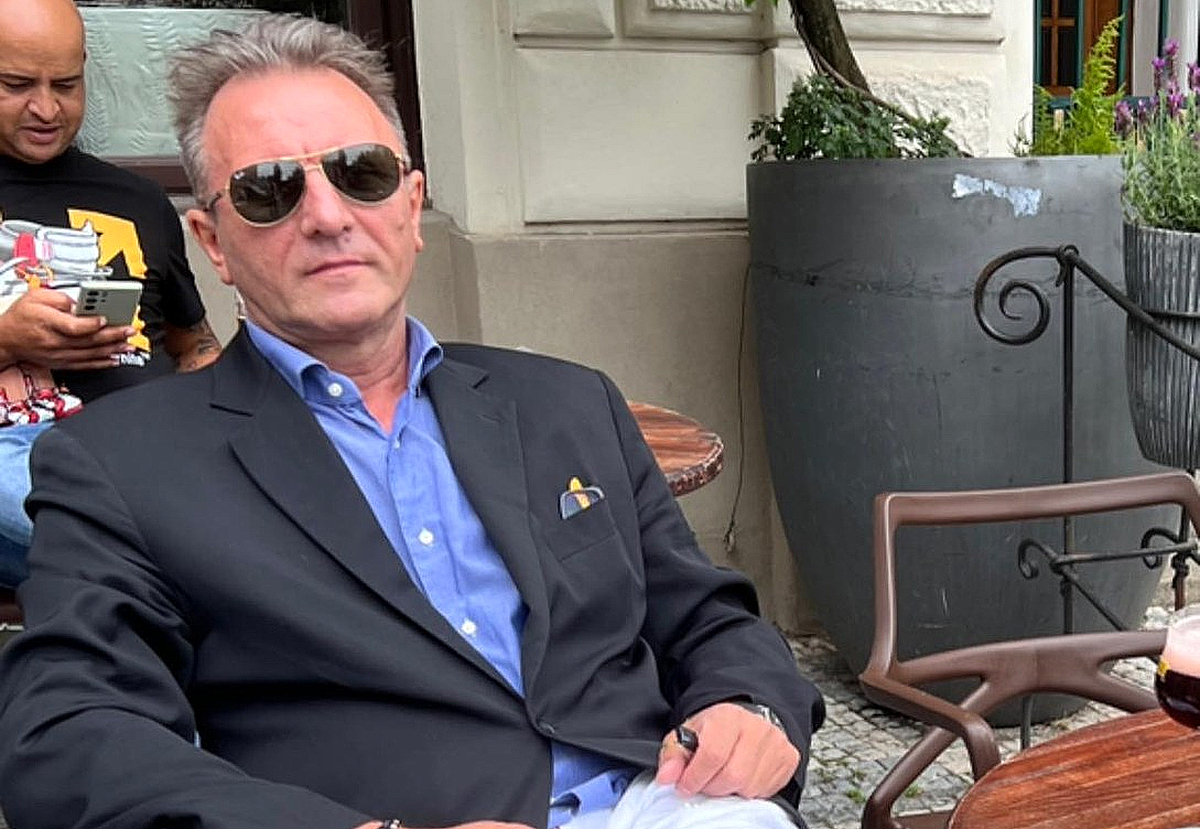 Vyacheslav Zakhoivaylo
— In your opinion, what is the reason for Dynamo’s point loss in five consecutive rounds?
— It’s due to accumulated problems. There are issues that are yet unresolved — particularly in the psychological aspect, relating to the game mindset. It’s evident that at the end of matches, not just one or two in a row, the team loses concentration and concedes goals. Therefore, questions arise about this.
No expert can tell you what’s really going on at Kyiv Dynamo. It has to be someone inside the team who sees and understands the psychological and physical state of the players and the atmosphere in the Dynamo locker room.
Generally speaking, there are also questions for the coaching staff. Usually, in clubs, it’s customary for the assistant coaches to appeal to the head coach, with work disputes happening and so on. I don’t know how it happens at Dynamo, but if all assistants are in sync, thinking everything is fine and expressing general approval, then it is what it is. When eyes are closed, it’s hard to find a solution or understand why things are the way they are. But I believe Dynamo will sort it out.
— What measures do you think the coaching staff should take to improve the situation?
— It’s hard to predict what needs to be done in the training process. I don’t think the problem lies in it — say, in the cycles or specifics of the training. If it exists at all. Kyiv Dynamo is a club of high professional level, so the training process should be organized appropriately. The other aspect is psychology. It’s important to understand that in football, psychology is not 50 but 70 percent of success. What’s crucial is the state of the team, the group of players, and the coaching staff. We don’t know and cannot know this as we are not inside the team. Therefore, anyone claiming they have a recipe would be lying.
— Should Oleksandr Shovkovsky be replaced with another coach?
— That’s a provocative question. The only competent person to answer this is Dynamo president Ihor Mykhailovych Surkis. He makes specific demands regarding the results and all related matters, so it’s up to him to decide whether to change the coach or not.
I believe it’s not entirely the head coach’s fault. The lion’s share of mistakes is the result of the entire Dynamo team’s work. In football, every season, every six months, or year, 20−30 percent of the main squad should be renewed with qualified players. If this process doesn’t occur, motivation drops, competition decreases, etc. The team mustn’t stagnate but continuously progress. When there’s no worthy rotation or influx of fresh blood, what more could you want? This is a football axiom, and it applies not only to Kyiv Dynamo but to any professional team.
— How should one untangle the Gordian knot in the conflict between Shovkovsky and the team’s veteran Andriy Yarmolenko?
— First, we don’t know for certain if this conflict exists. In my opinion, it’s likely more blown up in the press than it is in reality. In any professional football club (and I’m not talking about Dynamo specifically, but in general), experienced players have always had a special voice in the locker room.
And when the team leader, its veteran, starts to conflict or argue with the head coach, it completely undermines the authority of the mentor. Because the younger players look not at the coach but predominantly at their leaders, the experienced players. And if such a player openly shows discontent, nothing good will come of such a team — that’s for sure.
But again, I stress: I’m not talking specifically about Dynamo but in general, as there are hundreds of such examples in world football. Regarding the Kyiv team, I don’t know what the relationships are like. Dynamo needs to figure out what’s what. The main thing is that the club president must use his authority to bring order if there isn’t any. If the president is calm and unresponsive, it means the club is satisfied with everything.
Andriy Pisarenko