A year ago in Ukrainian football, an unprecedented event took place: former national team player and captain of Odesa’s Chornomorets, Andriy Telesnenko, received a heart transplant. The most vital organ in the human body was transplanted to him on November 19, 2024, at the capital’s Center of Cardiology and Cardiac Surgery Clinic of Ukraine’s Ministry of Health. This date became the patient’s second birthday.
The ex-footballer, now a coach, found himself on a hospital bed in early September last year when an examination revealed complex heart problems. Years of stress and strain had left many scars on it. Following a heart attack he 'walked around with', urgent surgery was necessary, but even then, the worn heart functioned at only 10 percent. The doctors' verdict was clear: a replacement was needed.
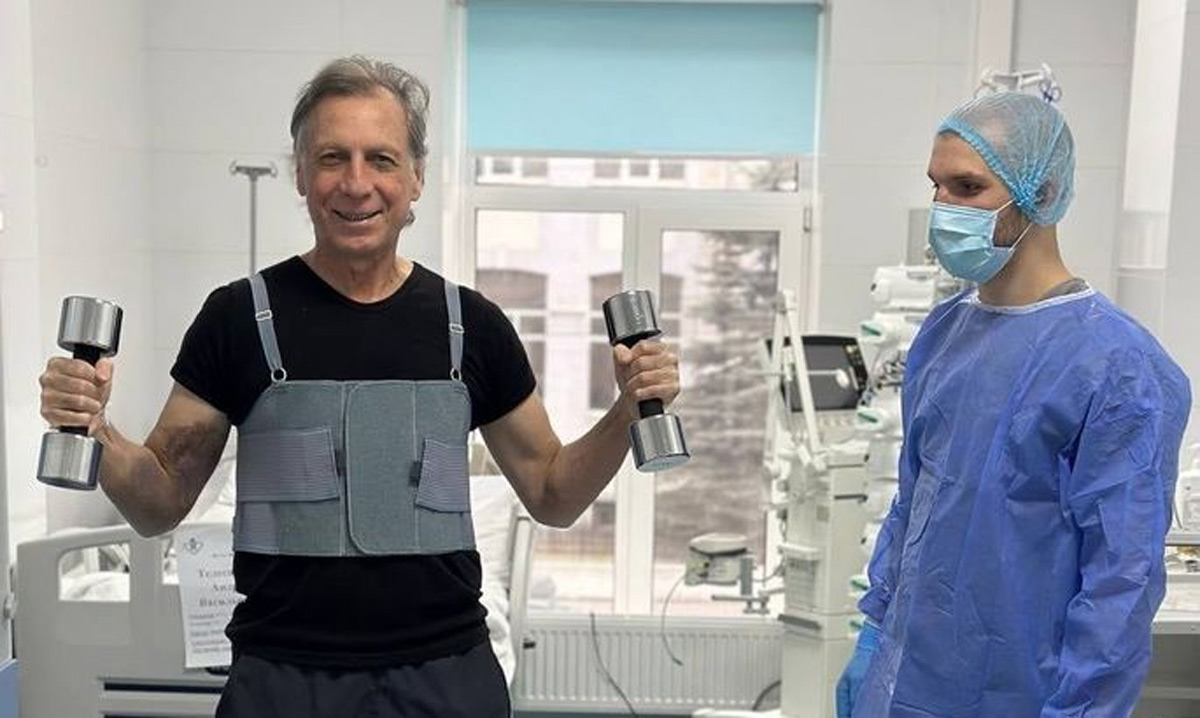 Andriy Telesnenko
— How do you feel with a new heart one year after transplantation?
— I feel good. I regularly visit the capital’s clinic for scheduled check-ups, which include extended blood tests, biopsies, coronary angiography, and more. Essentially, I do everything the doctors require to monitor my condition and, most importantly, the heart. Right now, I’m in the clinic for a thorough three-day examination.
— Did you experience any unforeseen health issues during rehabilitation?
— Unfortunately, it happened once. In mid-May this year. I suddenly felt very ill at night: started shivering intensely, experienced chills, and my temperature skyrocketed above 40 degrees. Luckily, an ambulance arrived in time and provided first aid. By morning, thanks to friends, a car was found to urgently take me to Kyiv. They were already waiting for me at 'my' clinic. After the examination, it turned out I had a very serious infection, which kept me hospitalized for three weeks. Two and a half of those under IV drips with various antibiotics. The first IV started at six in the morning and ended at one at night.
— What has changed in your life since the heart transplant?
— I’m undergoing a rehabilitation course which requires daily hour-by-hour intake of special medications prescribed by doctors. All these medicines aim to prevent the rejection of the new heart. Twice this year, I’ve undergone rehabilitation at a sanatorium which included various procedures. Besides that, I try to take walks in the fresh air and perform physical exercises with dumbbells at home. However, I live in a rented apartment.
— Quarantine mode?
— It was in place for the first three months. This period was recommended by doctors to prevent any unexpected complications. I was under the observation of a cardiologist who helped me immensely during the early period after returning to Odesa.
At home, it seemed I wasn’t expected, which was a big shock for me. I was without any attention from my wife during my rehabilitation. I never imagined that after all I had been through, she would abandon me. As a result, I was left without housing, a car, and a significant sum of money. I was discharged from my apartment while undergoing another check-up in Kyiv. But I didn’t learn about it until May. After such actions and attitude, I decided to file for divorce. Now my new heart is preparing for another severe ordeal — an unpleasant, burdensome, and lengthy process — the division of property.
— In such a difficult period, where do you find support?
— In communicating with close people, friends, colleagues, famous football veterans, and fans. Also in kind-hearted people from various fields. I express immense gratitude to everyone who did not turn away and helped me during this hard time. I owe a great debt of gratitude to each of them. This mainly applies to my saviors — head of the department of acquired heart defects Serhii Varbanz, cardiologist Marianna Dyakun, and all medical staff. And still, I often receive phone calls from different cities of Ukraine and other countries, including journalists. Some discovered that I am the first professional football player and coach in Europe to have had a heart transplant.
— Are there others like this?
— Not long ago, I found out that a few weeks after my transplant, the same operation was undergone by Serbian Milos Sestic, former player of Crvena Zvezda. There’s another football person with a new heart, but on another continent — in North America. It’s Canadian Simon Keith. But legendary Irishman George Best, ranked among the top ten players in football history, had a liver transplant.
— Do you attend football matches in Odesa?
— Yes, of course. Whenever possible, I attend games of my home team, Chornomorets, and the women’s team SeaSters. I also attend matches involving young players from FC Chornomorets Academy. I’m trying to live my usual life and plan to return to coaching activities. After all, football is everything to me!
Vyacheslav Kulchytskyi