Former Ukrainian national team footballer and now a representative of a football agency, Yevhen Konoplyanka, shared his perspective on modern football through the eyes of an agent, his adaptation to a new role, whom he dreams of representing, and whether he is drawn back to the field.
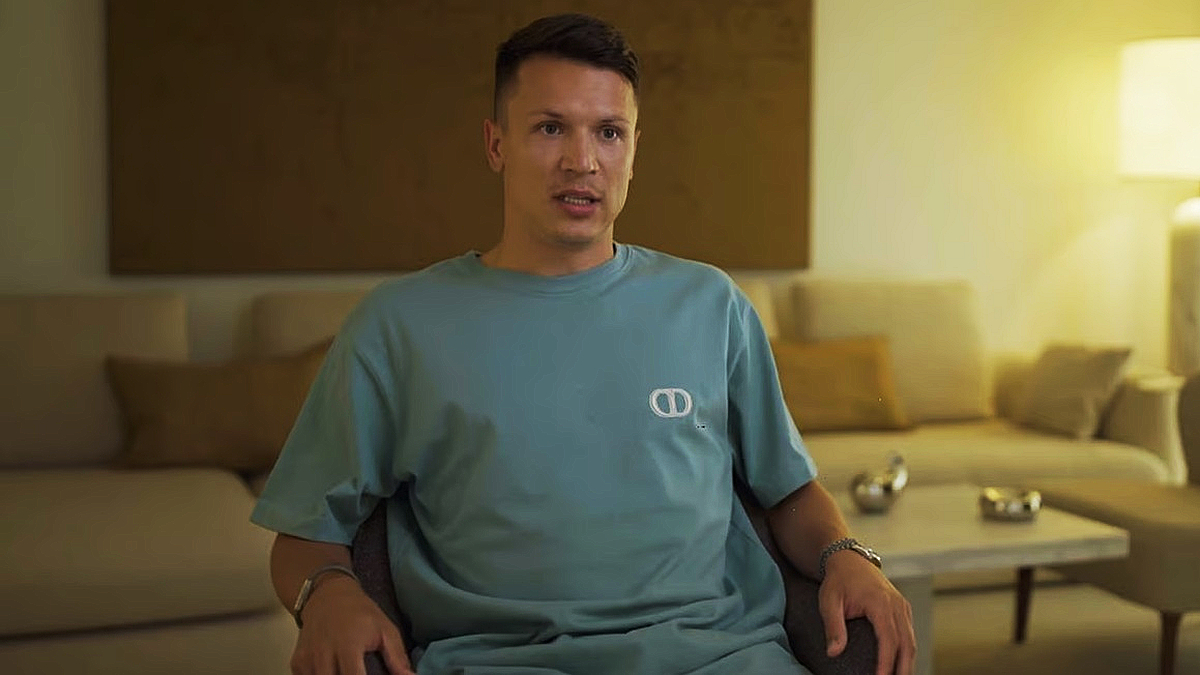 Yevhen Konoplyanka
— Yevhen, just a few years ago, we saw you on the field — emotional, driven, with a sparkle in your eyes. Now, you are in a different role: an agent, founder of your own project, someone who helps others build their careers. How does it feel to watch football not from the pitch but from behind the negotiating table?
— I haven’t been running on the football field for two years now — and I won’t. (Laughs). It’s just that the question sounded like you’re still waiting for me to return. Truthfully, I feel pretty good physically. But there has to be someone worth playing for. If there was an appropriate club in Ukraine, I’d play. But I don’t see the point of just stepping out to scrape my knees again or have my back creak even more in the morning.
If there was a coach whose philosophy and style were close to mine, believe me, I would go. It’s not about the money. It’s just a shame that because of the war, everything is not so easy to realize.
Regarding the change in activity — yes, I work in an agency. Roma Zozulya and I are developing this direction because we’ve been through many moments in football ourselves. And we want players who begin their journey today not to face what we went through.
— You mentioned coaches you would be interested to work under — and this, to some extent, influences how you now, as an agent, choose teams for your players. Which coaches appeal to you the most, both Ukrainian and European?
— As I said, I would still run for my coach and my home club — Dnipro. But unfortunately, we see the situation with the club now. Speaking of coaches in Ukraine, without a doubt, number one for me is Ruslan Petrovych Rotan. There’s no need to think twice.
In the last season, Shovkovsky showed himself well, regardless of current circumstances. I also admire Lupashenko — I like his style, the way he builds the game from the goalkeeper, not just clearing the ball. It’s a certain Spanish style that resonates with me.
Speaking of Europe, I really like Unai Emery. There’s even a parallel to be drawn between him and Lupashenko. I was at the training camps and watched live how they play — I liked it. Good gameplay, interesting football. Against Shakhtar and Dynamo, Karpaty showed themselves very well — the spectators enjoy such football.
I remember playing under Emery myself. He loves the system, a lot of movement, keeping everyone close, not taking large distances between players. Short passes, possession, compactness — that’s what matters to him. Where you have the majority, that’s your advantage.
I can really say something about De Zerbi as well. Wherever he works, his signature style is always visible. I saw how he implemented his tactical plan in Shakhtar, a good coach you want to learn from. Wonderful style.
— When you watch Ukrainian national team matches or the performances of your players who are now playing at a high level, how emotional does that make you? Do you worry more now than before when you were on the field yourself?
— When I watch the Ukrainian national team, when I see how my players are playing — I get five times more nervous than when I played myself. I can’t believe it myself. Throughout my career, I didn’t have a single gray hair. And now I have so many that I even wear a hat in the summer. (Laughs).
Seriously, when I see how ours play, especially when, for example, Mykhailenko’s team performed in the World Championship — I couldn’t watch calmly. I worried a lot. Even when the national team plays under Rebrov — it’s the same. Sometimes I joke: I should have played until seventy — then maybe I’d have less gray hair. (Smiles).
— How do you assess the team’s results in this group, considering the unsuccessful start? In your opinion, does the national team still have chances?
— There are always chances, even when it seems everything is very bad. Because life is like football: today, a black stripe, tomorrow a white one. If you fall into depression, tell yourself, «I’m unlucky, all is lost» — you might as well jump from the fifth floor. But that’s not the way. It’s just one small piece of life — just in football form.
Yes, there is criticism, there are fans who want us to win every game. And that’s normal. But let’s be honest — everyone has bad days at work. It’s the same here. Let’s say the match against Azerbaijan — just a bad day. We don’t even count France — they are favorites. But we must think about tomorrow because tomorrow can already be a «white» stripe. And I sincerely believe that things will get better.
I’m positive and want to give the team an impulse — even from my position now. Because I’ve been through similar things. At Dnipro, at Schalke, there were periods when we didn’t get paid bonuses or salaries, but we stayed as a team. We would gather together before the game, after the game — it didn’t matter when. We were like a family. And we always said to each other: forget what was yesterday. It doesn’t matter if you got paid or not, what the result was. The main thing is to go out, look each other in the eye, and say: «We can.»
Everything depends on unity. Regardless of whether the coach is good or bad, the club president or the conditions. If it’s the national team — there are top players. They can play even in sneakers, the main thing is to have the desire, the motivation, when you are one for another, like a brother for a brother. Because if you leave a friend, they will «beat him around the corner» and that’s your responsibility.
In the match against Azerbaijan, I already saw the sense of team emerge. Yes, the game was difficult, but you could see — the guys are fighting, there’s chemistry, there’s a collective. And I really liked it.
The coach will always be under pressure. He can win ten matches in a row and then lose to San Marino — and then the hate begins, «kick him out». That’s how it always is. Like with Shovkovsky: last season, he was on top, and now he’s being criticized. That’s football. The most important thing is to handle the pressure correctly. If the coach can keep the team close to him, in tune, charged, but calm — we will win against Iceland. And everything will be all right.
— You once said that in football, it’s not just about the legs, but also the head — and now that has become practically your profession. Considering the experience, principles, and values you’ve outlined, what is key for you in working with footballers? Is it strategy, tactics, or perhaps emotional trust?
— Of course, I’d like to work only with «Messis.» (Laughs). Six of those, and I’d be sitting with a cigar, only occasionally giving hints. But that would be uninteresting. The most valuable is passing on your experience and seeing how guys grow.
We work not only with professionals but also with older teenagers — from 14−15 years old to already adult players. We currently have around forty professionals and about the same number of younger ones. It’s enough to give each attention: see where they can improve, where they’re making mistakes, what needs to be fixed.
Sometimes laziness or wrong perceptions of the game take over someone — then we step in and explain. Honestly, I’ve never watched so much football in my life as I do now: even if the championship doesn’t seem «mine,» I still have to watch carefully — our players play there. It’s necessary to know, understand, analyze.
Everyone has their «key»: one needs heightened attention, another needs three precise words, and they’ve already made a breakthrough. Usually, I’m in touch with the guys before and after the match. For example, Velikiy: when we started working with him, many coaches noted how quickly he was progressing. I’d like to think that some of that is our work. I don’t claim all the credit — no. But if a footballer feels support and genuinely believes in the common cause, it means we are doing everything right.
I mostly give advice to those playing my position: I try to be there, like with my own son — to praise but also to correct in time. If I see ten episodes where things could have been played better — we’ll analyze each one. I want him to consider these details next match, and then say: «Wow, it works.» Mistakes are normal. It’s important for the player to want to correct them. And here’s the answer to your question: strategy and tactics are important, but without trust, without the right «head,» all this doesn’t take off. Trust is the foundation on which both game plans and career development are built.
— You know, regarding Velikiy, it was often said that to join the Ukrainian national team, there were, so to speak, only two springboards — Dynamo and Shakhtar. And now we could say that Polissya has become such a springboard. And it just so happened that Velikiy moved to this club, played a few matches — and already received a call-up to the national team.
— Yes, this is a very indicative example. Undoubtedly, Dynamo and Shakhtar are like Barcelona and Real in our scale. But let’s recall Atletico in their best years — when they were consistently second. Why can’t we have a similar story in Ukraine? Once Alexandria was also in the upper part of the table and won silver. It just needs time. If, say, Mr. Rotan managed to make Alexandria a competitive team in one year, imagine what it would be like for five years of his systematic work.
In a few seasons, the national team may not only have representatives from Dynamo and Shakhtar but also players from other clubs — Polissya, Karpaty, maybe even LNZ if they play consistently and with quality. Velikiy’s call-up is not random: Polissya is now showing very substantial football — they score a lot, play inspired, with an idea. The team has powerful wingers — Velikiy, Nazarenko, Gutsulyak — they all deserve attention.
The national team coaches look not only at big names but also at the essence of the game — attacking football, dynamics, chemistry. It’s valued. We just got used to thinking everything is limited to Dynamo and Shakhtar, but that’s long not the case now.
If the team plays quality, has results, an internal mood, and works as a single mechanism — it will definitely be noticeable. It’s about coherence, atmosphere, and belief in the common cause. If a coach can convey this to the players — the result is inevitable.
Everything is real. Once in the Spanish national team, there were not only representatives of Real and Barcelona, but also Atletico, Valencia, Sevilla. The same can happen with us. Why not call players even from LNZ if they demonstrate quality football and make it to the top-5 of the championship?
— We often see that in Ukrainian clubs, coaches are changed too quickly — sometimes after two or three unsuccessful matches. How do you feel about this and, in your opinion, how much time does a coach need to really show themselves and prove their capabilities?
— As a player, I don’t think it’s always right. You need to understand the context: how experienced the coach is, what his conditions are, what the club’s budget is. If it’s a project that is essentially starting from scratch — obviously, the process needs time.
Let’s take Polissya as an example. They have a clear goal — to get into the top three. If the team is in fourth place, it’s not a failure at all. And talking about changing the coach doesn’t make sense here. But if a club has a big budget, loud ambitions, and then drops to mid-table — then, of course, legitimate questions arise.
The same goes for other teams. If it’s conditionally a league mid-table team that sometimes wins, sometimes loses — no one expects constant stability from them. It all depends on the ambitions — president’s, management’s, and the coach’s itself.
I mentioned Metalist 1925 because I know well how this club and Polissya strive to be at the top of the table. They are teams with potential and a desire to fight for high places. They share the philosophy of not wanting to settle for mediocrity.
But even big brands like Dynamo or Shakhtar, that are always at the top, need updates. Brand status is maintained only when everything inside the club works — from management to players and the coaching staff. It must be a clear system where everyone performs their function, like a clockwork.
So, in my opinion, you can’t fire a coach after two or three unsuccessful games. If you picked the right people — those who think alike, strive to win, move forward — the result will definitely come. In football, as in life, there are no unreal things. There are simply those who believe in the process and those who give up too early.
The most important thing is how you react when something goes wrong. If you make the right and timely adjustments — everything will work out. Top clubs are distinguished precisely by this: they know how to analyze, adapt, and maintain rhythm. Because if a club stops creating, doesn’t update, doesn’t surprise — it just dries up. Not without reason, Simeone constantly updates the squad: he feels when to «add fire» so that the team doesn’t extinguish.
Rotan did the same. In Alexandria back then, few believed that he could change the situation, but he did. And now in Polissya — a similar story. At the season’s start, there were a lot of new players, and everyone was expecting immediate results. But Ruslan Petrovych immediately said: «This is a process. Time is needed.» And he saw where changes were needed.
He signed several key players — and here’s the result: the team is fighting for the championship. And just five-seven tours ago, we could have been talking about a crisis or dismissal.
Any coach needs time. Even if I come to a new place — I also need a few days to feel the people, understand how they work, find an approach. And only after this, can we talk about the result.
Rotan proved it: it took him a little time to turn the team in the right direction. And honestly, I like it when club presidents live for football. It’s felt. Look at Shakhtar: why are they always at a high level? Because the president loves football, lives it. And when the energy comes from the top — it passes on to everyone.
— How important do you think it is now for players to be open to communication with the media? It seems to be becoming an increasingly big problem.
— You know, I’ll tell you straight — the problem is not only with the footballers. It’s because some journalists have simply ruined trust. And I’m not afraid to say this openly. There’s one journalist who loves to talk a lot of nonsense. He doesn’t respect the footballers, allows himself to speak disrespectfully. These kinds of people, unfortunately, have made players more closed off.
It’s like on a team: there can be one player who destroys the atmosphere — and everything falls apart. It’s the same in the media: a few people spoiled the reputation of the whole environment. Because when an athlete opens up, speaks honestly, and then sees how his words are twisted for clickbait or views — he simply doesn’t want to communicate anymore.
I’ve been through that myself. You speak from the heart, sincerely, and then read and don’t recognize your words: everything turned upside down. For what? Just to make the headline brighter and «catchier». But it hurts. Because you want to be honest, but you’re portrayed in a negative light.
Recently, they pulled out an old video with Kvartsyany. Roman Bebekh, if I remember correctly, asked him a provocative question — and it was clear the coach was deliberately provoked. And then it was presented as a sensation: supposedly Kvartsyany shouted. Well, of course, he shouted because the question was designed to unbalance him. Or when they bluntly asked Blokhin: «When are you resigning?» — that’s not journalism, that’s provocation. You can’t do that.
That’s why I completely understand footballers. They’re afraid their words will be cut out of context or presented twisted. And then — problems arise: the club reads, makes conclusions that you «barked» — and it starts. A person who wanted to be honest, ends up suffering.
Because of this, guys close off. We often discuss this among ourselves — I explain to them that they need to be open but at the same time cautious. If I were sure all journalists are correct, sincere, friendly, I would tell the players: «Say everything you think.» But unfortunately, not everyone is like that. So now everyone thinks ten times who they’re giving an interview to and what they’re saying.
And it’s not easy for footballers already. When there’s no result, when there’s pressure from all sides — the last thing you want is to read about yourself distorted quotes. Because sometimes the journalist asks straightforwardly: «Are you worth your money? Why are you even playing?» — how do you expect the footballer to answer? Emotionally, of course. Because that’s not a question, it’s an insult.
But I always say: one must remain a man. If you did or said something — answer, explain, don’t run. This is also part of professionalism. Just without these cheap provocations that spoil everything around.
— How difficult is it for you to promote Ukrainian footballers abroad now? Do you have a strategy — on how to sell Ukrainian talents to Europe in wartime conditions? What are the main challenges?
— Look, anything is possible. And Sudakov’s example shows that perfectly. All the top football countries — Spain, Portugal, France, Germany — are interested in our guys. They just need to realize that they need to work at maximum capacity. Because everything in life is real.
Even if you recall Mudryk’s transfer for a hundred million — who would have believed it five years ago? No one. But he proved: if you play well, it doesn’t matter in which country or league — you’ll be noticed. The main thing is to set a goal and move towards it, not be lazy, live football, and enjoy the work.
We, the agents, also work for this. It’s easier for us when we see real talent. We try to send such guys to Europe, most often to Spain. This championship is very close to me: there is technical football, a focus on intelligence and ball control. If you prove yourself, you don’t need to «jump» further — just move across La Liga, change clubs, grow, improve.
But everything depends on the person themselves. If you’ve relaxed, come without mood, without dedication — don’t expect progress. The competition is huge. As soon as you lose motivation — someone will immediately appear who works more.
When we talk about young players, we always evaluate several things: age, physical data, technique, psychology. If we see a guy is ready both mentally and professionally, then we move forward — we discuss everything with the parents, explain the realities. Because there shouldn’t be a situation where the player says in a week: «I want to go home.» We need to be sure everyone is ready for this challenge.
We have many examples. Some go — and in a few months show a leap. Like Popov in Empoli — you can see his growth. And some, on the contrary, think they’ve already «outgrown» the level, but the real progress is minimal. We always honestly discuss it.
Much depends on character too. For example, I have a guy in Düsseldorf. He constantly sends his matches, I watch them, make screens, draw arrows, show where he should have played differently to impress scouts. This is not just agent work, this is mentoring.
Because football is not just technique. It’s also human qualities. A player can be strong but closed, non-communicative. And in Europe, this is a big issue. They love open, cheerful, team people there. In Spain, for example, if you’ve come, sit in a corner silently — no one will notice you. You need to communicate, smile, be part of the team.
So we always explain to the guys: learn the language. I went through this myself. When I joined Sevilla, I didn’t know a word. But in six months, I was speaking without an interpreter. It’s important — not to waste time.
When the club sees that you are ready, come with a mood, with a desire, putting in effort — they value you. Even if you made a mistake somewhere, they’ll say: «It’s okay, all good.» But if you’re indifferent, without spark — they’ll forget.
So for me, the main goal is not to sell a footballer but to help him realize himself. Because when you see a guy progressing, scoring, growing — it’s the biggest satisfaction.
— You said you work with Roman Zozulya. But do you have a former Dynamo player in your team?
— Yes, it’s our lawyer — Oleg. He holds the license, and, as we joke, «does all the dirty work»: legal issues, contract details — the things we don’t really like. And we already dedicate more time specifically to football, working with players, negotiations, development.
— In short, today, is the ideal agent in Ukraine a market predator or a partner who builds strategy for years ahead?
— You need to find the golden mean. Both are good. It depends on the situation. Every player is a separate story. And the most important thing is not to rush. Because haste is not always beneficial. The player should be ready a hundred percent, should «sleep over» a decision, think it over, consult with people they trust.
We always calculate all options: where there are more positives — that’s where we move. We can’t do everything too quickly, but sitting until the last moment is also a mistake. Because when the season starts, it just complicates the player’s life.
— And speaking of an agency dream — would you like to represent an already established world-level star or grow your player from scratch?
— When it comes to a dream — to grow your own. To lead a guy from the first step to the world level — that’s the coolest. In our business, trust is key. The player needs to know who’s nearby, to whom they can open up. When an agent for a footballer is like a father, when you go through all the stages together — it’s priceless. I want the guys to be able to rely on us and be sure: there is a person nearby who won’t betray. Because true friends and partners in this world are few — and if they are, it’s a great happiness.
Kateryna Bondarenko