The Italian publication «Il nobile calcio» published an article titled «Ukraine — the Driving Force of Soviet Football,» dedicated to Ukraine’s role in the past successes of Soviet football.
«From the triumphs of Dynamo Kyiv to Lobanovsky’s tactical revolution: how Ukrainian football shaped the identity and glory of the USSR,» reads the introduction to the article, the full text of which we bring to your attention below.
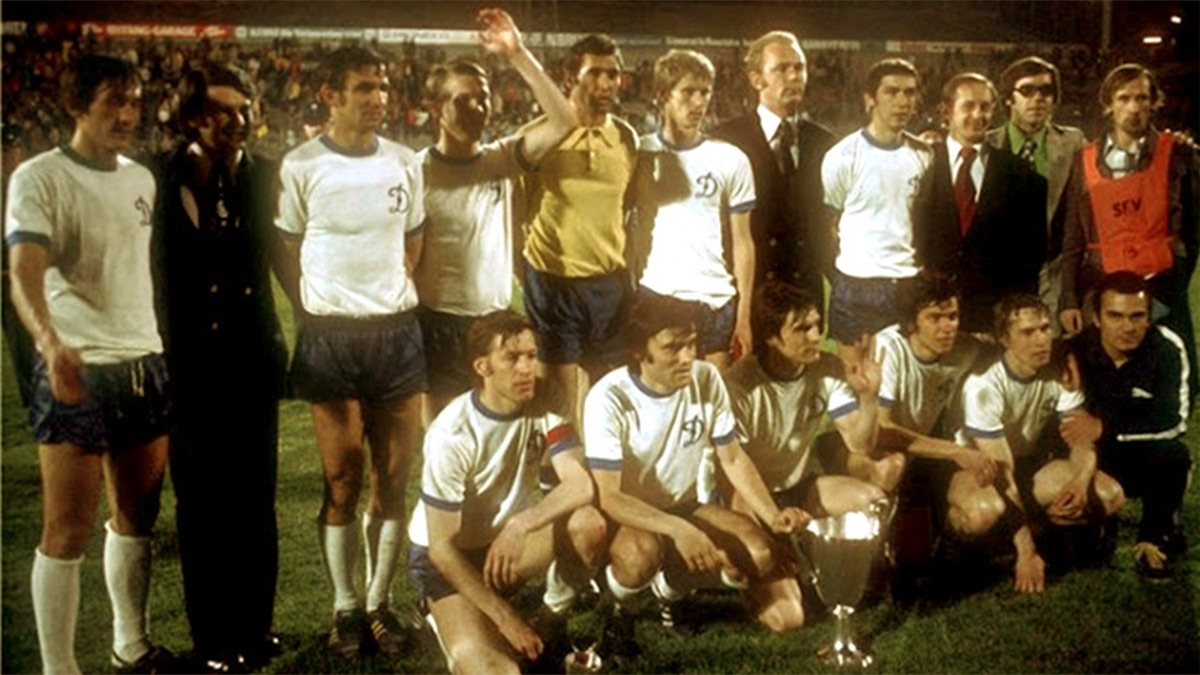 «Dynamo» (Kyiv) with the 1975 Cup Winners' Cup
Although Ukraine’s achievements as an independent state have been modest, it is impossible to deny the central role of its footballers in the history of Soviet football, especially in the 1970s and 1980s.
From the end of World War II until 1991, Ukrainian teams won 16 out of 48 Soviet championships: 13 of them went to Dynamo Kyiv. Only Russia achieved more, with 28 titles. Ukraine was renowned for the talent of its players, able to combine discipline and team spirit with skill, technique, and improvisation.
The person who primarily embodied this philosophy was Valeriy Lobanovsky, born in Kyiv in 1939 and who became one of the most influential minds in European football. With Dynamo, he won 13 championship titles, nine national cups, and two Cup Winners' Cups; with the USSR national team, he reached the final of the 1988 European Championship. His «systematic football,» based on pressing and organization, was years ahead of modern trends and even influenced Rinus Michels, the father of «total football.»
Under Lobanovsky’s leadership, three Ukrainian Ballon d’Or winners emerged: Oleg Blokhin, Igor Belanov, and, more recently, Andriy Shevchenko. Blokhin won this trophy in 1975, leading Dynamo Kyiv to victory over Ferencváros in the Cup Winners' Cup final, displaying spectacular football, earning the nickname «The Steppe Cruyff.»
Anatoliy Byshovets is a key figure in Soviet and post-Soviet football: an elegant striker for Dynamo Kyiv in its golden years, and later a coach who led the USSR national team to an Olympic gold medal at the 1988 Seoul Olympics. An incredibly charismatic and tactically astute coach, he led three national teams — the USSR, Russia, and South Korea — building a symbolic bridge between different eras and football cultures.
In the 1970s, the Ukrainian presence in the Soviet national team significantly increased: in 1972, eleven players called up for the European Championship were natives of Ukraine. In 1982 there were nine, and by 1986 there were as many as fifteen, many of whom were products of Dynamo Kyiv, which won another Cup Winners' Cup that same year, defeating Atlético Madrid 3—0 in the final.
This period marked the pinnacle of Soviet football, but also the last outstanding season before its decline. With the dissolution of the USSR in 1991, clubs from the republics decided to unite into their own national leagues. In Ukraine, as in other countries, the transition period brought economic difficulties and social disintegration, but also the formation of a proud and independent football identity.
Today, recalling that glorious season, we realize how Ukrainian football fueled the sporting might of the Soviet Union. Without Kyiv and its maestros, red football would not have had the same soul. There were times when Russians and Ukrainians worked together towards a common goal: now, unfortunately, they are moving in opposite directions.
Mario Bocchio, «Il nobile calcio»